
“It’s all a question of masks… brittle, painted masks. We all wear them as a form of protection. . . . We must have some means of shielding our timid, shrinking souls from the glare of civilization.”
Noel Coward 1899-1973
I’ve been thinking a lot recently about hope. Faced with a daily onslaught of minute-to-minute disaster it is increasingly difficult to imagine a better future, to find a place of hope in the wasteland of the World Wide Web. I’ve also been thinking a lot about gender, class, and identity as I’ve been working on developing an English translation of Gabriel, a forgotten work by 19th-century French author George Sand.
George Sand – Celebrity Scandal in 1835
George Sand was a prolific writer and boundary breaker in her own time. She was known for dressing in men’s clothes and smoking a pipe, as well as many affairs with men and women.
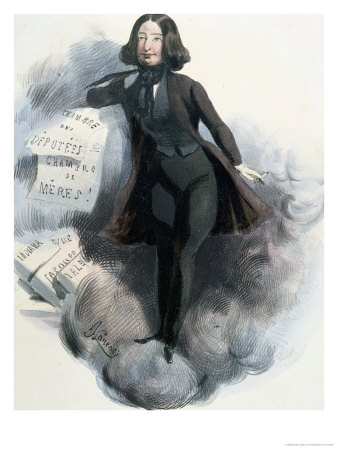
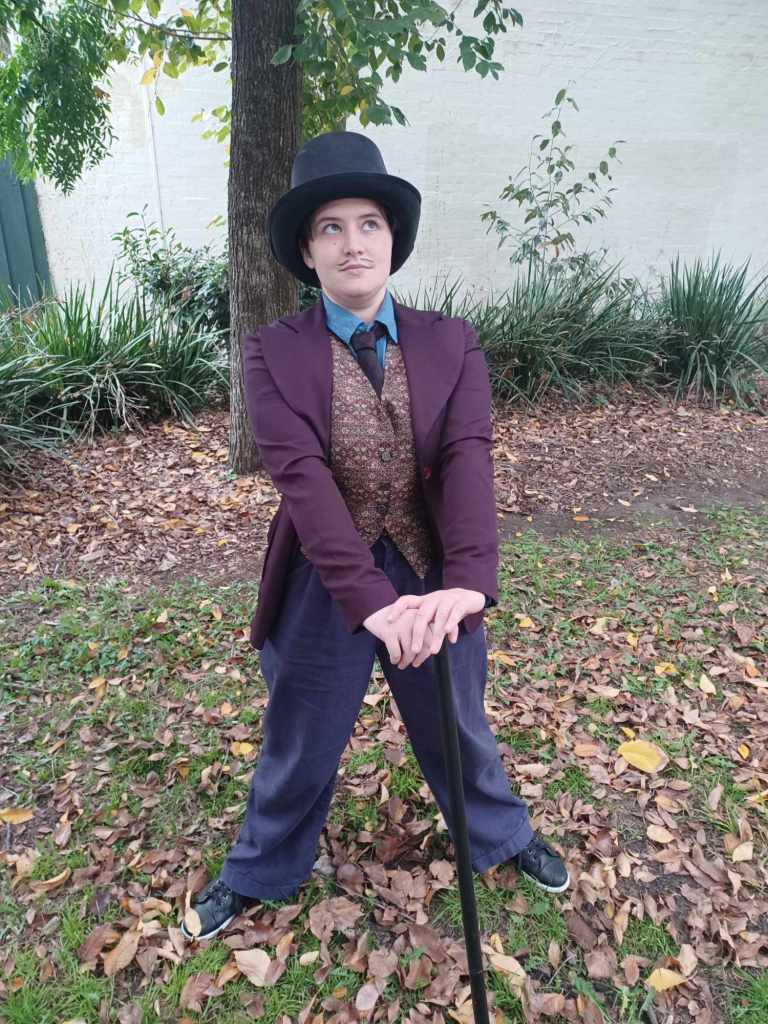
A crossdressing heroine is a common trope in both George Sand’s own work and in mythology and literature, but Gabriel’s protagonist doesn’t just take on her male identity for a brief episode, but lives the majority of their life as a man, while remaining attached to her female identity.
Gabriel(le) – a gender queer heroine, or a woman born into the wrong century?
Gabriel follows the titular character, a young woman who has been raised in isolation to believe they are a man so that they can inherit their Grandfather’s title. Gabriel discovers their “true” sex, falls in love with their cousin Astolphe, and becomes trapped between their desire for love, independence, and compassion.
But we’re all free to be who we want now, right??
So, what does a 19th-century Romantic drama have to do with finding hope on the internet? I have fallen in love with Gabriel because Gabriel’s experience of isolation from a world and self that she loves but cannot understand is deeply familiar to me. Isolation, profound isolation that comes from believing you cannot be loved as you are, is the curse of those who are different, those who are LGBTQ+, or neurodivergent, or disabled, or a dozen other things.
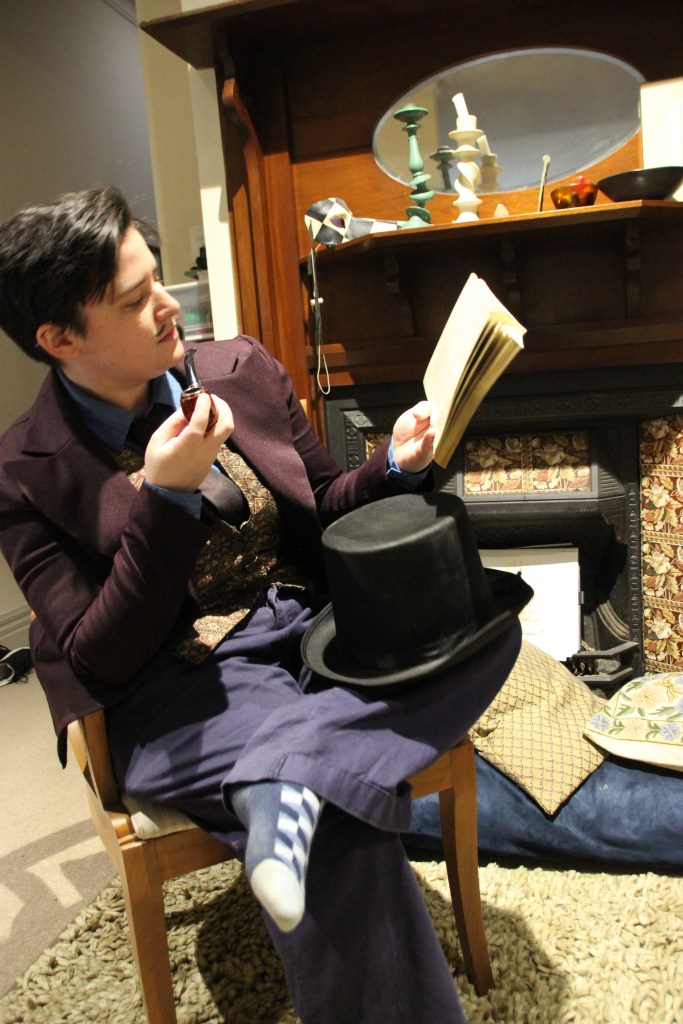
Of course things are a lot better now than in the 1830s. I can share this photo of me in drag reading one of George Sand’s scandalous novels without fear of imprisonment or violence-at least in Australia. But in other nations, or in the wrong community within Australia, things could be very different. I’ve had friends who had to flee their families permanently to gain safety. Before they were able to flee, they had to hide, and it’s hard to figure out who you are when you’re hiding. That’s why social media is such a powerful tool for freedom.
Social Media- a deal with the devil?
Before I start singing social media’s praises like I just got back from a tech conference in 2005, lets get some important context. The internet, from its inception, was imagined to be a space free of labels, assigned identities and earthbound social norms. In reality, the structural inequalities of the “real” world were quickly reproduced in the digital one. The commercialization of social sites in recent decades have created additional pressures to put people back in boxes so that they can be better packaged to advertisers (Marwick, 2013). Marwick argues that “The fantasy of the Internet as disembodied playground is just that, a fantasy” (2013, p.362).
Fantasy is better than nothing
OK, so the internet isn’t perfect. Why is social media, reflection of our messy capitalist world that it is, still such an important tool for self-expression? Cavalcante (2013) presents a number of reasons why the internet is a particularly inviting platform for queer communities and individuals. Internet communities aren’t spatially locked, meaning they can be accessed by a dispersed community that isn’t naturally spatially congregated. The internet can also be anonymous, allowing a young queer person living in a conservative community to access queer communities with less fear of being exposed. Internet communities can also serve as simultaneous social and learning platforms, providing access to sexual education as well as creating a space to explore personal identities with each other. What begins as a search for information about your own difference can cascade into an understanding of a whole alternative world.
Bringing back Gabriel
I started this post with a Noel Coward quote, doom-scroll despair, and the summary of a 19th-century play.
Artists like George Sand, Hannah Gadsby, and Noel Coward have each used their chosen media to express forbidden desires, to reach out with their hidden souls and ask where they might belong. Social media can be anyone’s stage: you don’t need to be especially talented or even very determined; if you reach out, someone will answer. Theorists have long argued that identity is performative, plural and changing, not fixed and static (Marwick 2019). I think the transformative effect of social media is that it provides a unique stage for the performance of identity. The “not realness” of the internet allows people to explore identities outside of the “real” world. Not only is it safer than expressing these identities elsewhere, but it allows an exploration many identities without contradiction.
I want to re-stage George Sand’s Gabriel, along with other historical queer texts, through Social Media. I’m believe that social media has incredible potential as a stage for collective imaginations of new worlds, ones that may give us hope to build a better world.
Image Credits
Banner Image is: “Noel Coward (1963) by Erling Mandelmann – 2” by Erling Mandelmann, licensed under CC BY-SA 3.0. To view a copy of this license, visit https://creativecommons.org/licenses/by-sa/3.0/?ref=openverse.
“Caricature George Sand 1848” by Axagore is licensed under CC BY-SA 3.0. To view a copy of this license, visit https://creativecommons.org/licenses/by-sa/3.0/?ref=openverse.
Works Cited
Cavalcante, A. (2019). Tumbling Into Queer Utopias and Vortexes: Experiences of LGBTQ Social Media Users on Tumblr. Journal of Homosexuality, 66(12), 1715–1735. https://doi.org/10.1080/00918369.2018.1511131
Haimson, O. L., Dame-Griff, A., Capello, E., & Richter, Z. (2021). Tumblr was a trans technology: the meaning, importance, history, and future of trans technologies. Feminist Media Studies, 21(3), 345–361. https://doi.org/10.1080/14680777.2019.1678505
Marwick, A.E. (2013). Online Identity. Hartley, J., Burgess, J., & Bruns, A. (Eds.), A Companion to New Media Dynamics (pp. 355-394). Wiley-Blackwell.
 Making With Ayala
Leave a comment